

Weight is one of the simplest measurements in the world, and one of the most important. In manufacturing plants, warehouses, ports, and processing facilities, an inaccurate weight reading can mean wasted material, failed quality checks, overloaded trucks, or costly compliance issues. That’s why industrial weighing scales are considered essential equipment across nearly every industry that produces, stores, or ships physical goods.
In this article, we’ll break down what industrial weighing scales are, how they work, the main types you’re likely to come across, and the industries that depend on them daily.
What Are Industrial Weighing Scales?
Industrial weighing scales are heavy-duty measurement devices built to weigh loads that range from a few grams to many tons, in environments that are often demanding: dust, moisture, vibration, extreme temperatures, or constant heavy use. Unlike household or retail scales, industrial scales are engineered for durability, precision, and repeatability under continuous operational stress.
How they work: Most modern industrial scales rely on load cells, sensors that convert the physical force of a weight into an electrical signal. When an object is placed on the scale’s platform, the load cell (or cells, in the case of larger scales) detects the deformation caused by the weight and sends a proportional electrical signal to an indicator or digital display. That display converts the signal into a readable weight value, often with the ability to record, transmit, or integrate that data into inventory and quality-control systems.
Older or simpler mechanical scales use springs, levers, and counterweights instead of electronics, but the industry has largely shifted toward digital, load-cell-based systems for their accuracy and ease of integration with modern software.
Common Types of Industrial Weighing Scales
Because “industrial scale” covers such a wide range of applications, manufacturers produce many different configurations, each designed for a specific job. Here are some of the most widely used types:
- Bench Scales
Compact scales placed on a tabletop or workbench, ideal for weighing small to medium parts, packages, or ingredients in production and quality-control settings. - Floor Scales
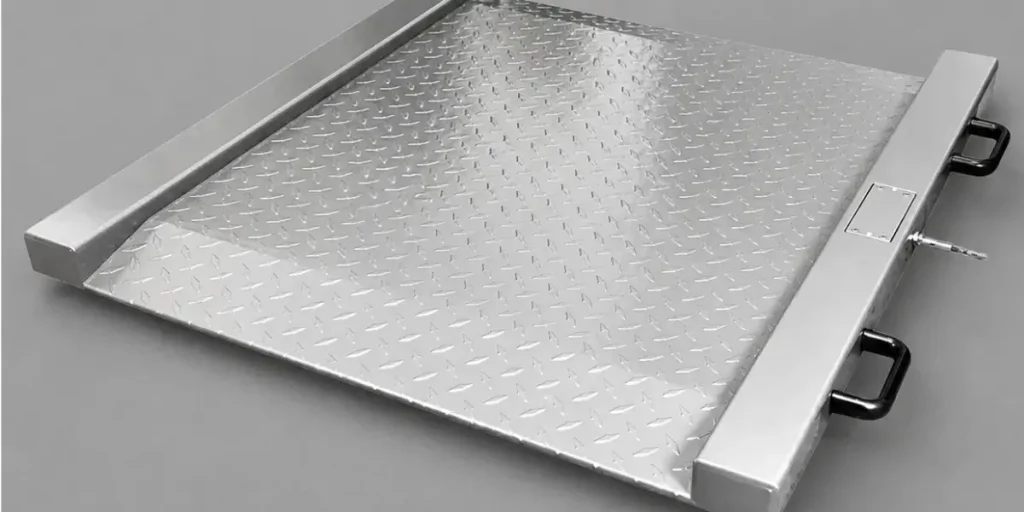
Low-profile platforms installed at floor level, used for weighing larger items, pallets, or drums without the need for lifting equipment. - Platform Scales
Similar to floor scales but often built for heavier-duty use, commonly used to weigh bins, containers, and bulk materials. - Crane Scales
Suspended scales that hang from a crane, hoist, or forklift attachment, used to weigh loads while they’re being lifted. Common in warehouses, shipyards, and construction sites. - Counting Scales
Precision scales that calculate the number of identical small parts (screws, components, etc.) based on average unit weight, saving time compared to manual counting. - Shipping Scales
Designed for logistics and fulfillment operations, these scales weigh packages quickly and accurately to calculate shipping costs and support labeling systems. - Forklift Scales
Load cells integrated directly into forklift forks, allowing operators to weigh pallets the moment they’re lifted, without a separate weighing step. - Truck Scales
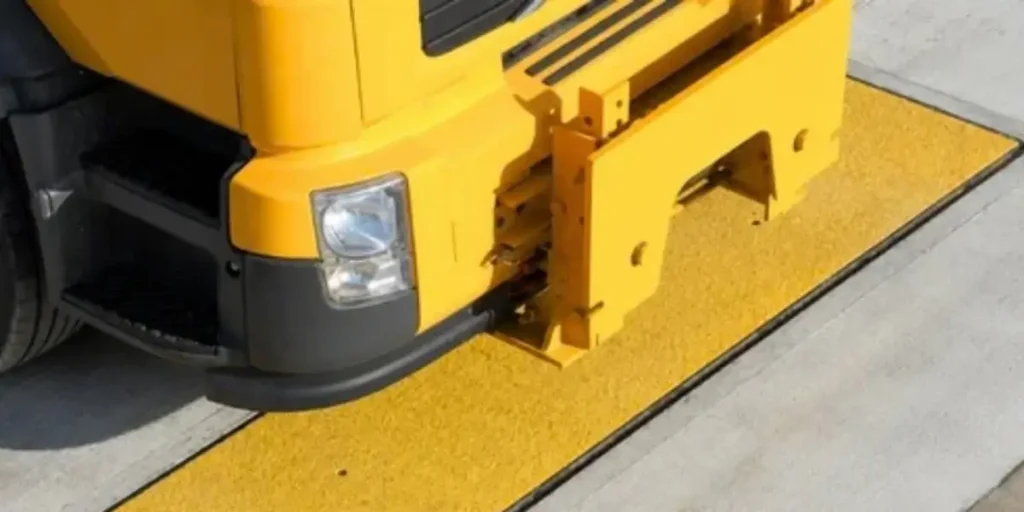
Large-capacity scales, often installed at ground level or as a pit scale, used to weigh entire trucks and their cargo for logistics, billing, and regulatory compliance. - Conveyor Scales
Integrated into a conveyor belt system to weigh materials continuously and in real time as they move through a production line. - Washdown Scales
Built with sealed, corrosion-resistant housings so they can be regularly hosed down and sanitized. Essential in food, beverage, and pharmaceutical environments.
This is far from an exhaustive list. There are many more specialized types built for niche applications, from livestock scales to explosion-proof scales for hazardous environments. You can browse the full range of scales available through ZFA’s catalog to find the right fit for your operation.

Industries and Applications
Industrial weighing scales show up wherever accuracy, efficiency, and accountability matter:
- Manufacturing & Production
Verifying raw material quantities, monitoring batch consistency, and supporting quality control on the factory floor. - Warehousing & Logistics
Weighing pallets, verifying shipment weights, and supporting inventory accuracy from receiving to dispatch. - Food & Beverage
Precise ingredient measurement for recipes and portioning, along with washdown-capable scales that meet hygiene standards. - Pharmaceuticals & Chemicals
High-precision weighing for formulations, where even small inaccuracies can affect product safety and compliance. - Agriculture
Weighing grain, feed, livestock, and bulk commodities at farms, silos, and processing facilities. - Construction & Heavy Industry
Truck and crane scales used to manage material loads, ensure legal transport limits, and track site logistics. - Retail & E-commerce Fulfillment
hipping scales that keep packaging and shipping costs accurate at high volumes.
Across all these sectors, the common thread is the same: reliable weight data supports better decisions, whether that’s pricing a shipment, meeting a regulatory limit, or catching a production error before it becomes expensive.
Digital vs. Analog Scales
Traditional analog scales use mechanical springs or balance beams to indicate weight, and while some are still in use for basic tasks, they’ve largely been overtaken by digital scales in industrial settings. Digital scales offer higher accuracy, faster readings, easier calibration, and the ability to connect with software systems for automatic data logging, inventory tracking, and reporting. For most industrial applications today, digital scales are the standard, while analog options tend to be reserved for simple, low-stakes weighing tasks where connectivity and precision aren’t a priority.
Conclusion
Choosing the right industrial weighing scale isn’t just about finding something that displays a number. It’s about matching the scale’s capacity, accuracy, durability, and features to the actual demands of your operation. The wrong scale can lead to inaccurate data, slower workflows, or equipment that wears out faster than it should. The right one becomes a dependable part of your daily operations, quietly supporting everything from quality control to logistics.
If you’re not sure which type of scale fits your needs, the team at ZFA can help you find the right solution, from bench and floor scales to truck and conveyor systems, backed by expertise in industrial weighing equipment across a wide range of industries.

